
When a home insurance claim is denied, delayed, or underpaid, the family pays for repairs out of pocket while the insurer moves on. Alysan Boothe Collins has litigated home insurance bad faith cases in New Mexico since 1992. Collins & Collins, P.C., takes these cases on contingency. No fee unless we recover for you. Call (505) 242-5958.
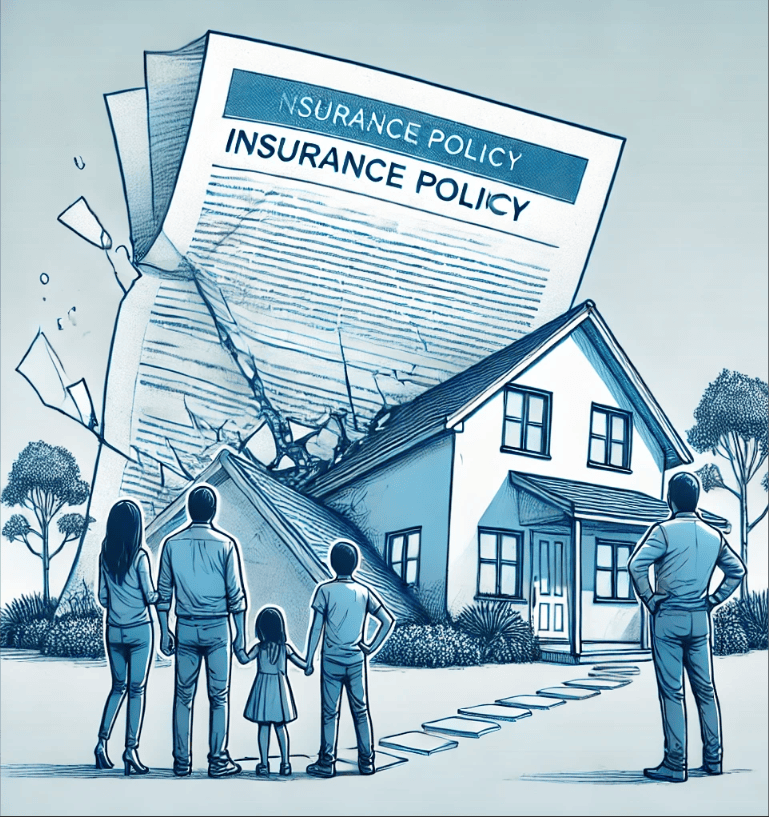
When a homeowner’s insurance company denies, delays, or underpays a claim, the family pays for repairs out of pocket while the insurer moves on to the next premium. Insurers count on homeowners not pushing back. Their adjusters are trained to minimize payouts, call storm damage wear and tear, and wait.
Alysan Boothe Collins has litigated bad faith insurance cases in New Mexico since 1992. has litigated bad faith insurance cases in New Mexico since 1992. Our Albuquerque home insurance bad faith lawyers at Collins & Collins, P.C., located at 407 7th St NW, Albuquerque, NM 87102, take these cases on contingency. No fee unless we recover for you.
If your homeowners’ insurance company denied a storm, fire, water, or theft claim, call (505) 242-5958 or request a no-obligation case review today.
Home insurance bad faith occurs when an insurer refuses, delays, or mishandles a valid claim without a legitimate factual or legal basis. New Mexico law requires every insurer to investigate claims thoroughly, communicate coverage decisions promptly, and settle claims fairly when liability is clear. When an insurer fails any of these obligations without a legitimate basis, that is bad faith under New Mexico law.
New Mexico homeowners file legitimate claims every year that insurers reject, minimize, or stall using a predictable set of tactics. Recognizing them is the first step to fighting back.
Each of these tactics has a counter. Collins & Collins, P.C. has litigated home insurance bad faith cases involving all of them.
A denied or delayed claim does not just delay a repair. It creates a financial and practical crisis that insurers count on homeowners being too exhausted to fight.
Holding an insurer accountable for bad faith in New Mexico means using every legal mechanism the state provides. We pursue all of them.
New Mexico bad faith is a tort, not just a contract dispute. Homeowners can pursue three categories of damages plus statutory attorney fees.
Request a no-obligation case review with us to find out which of these remedies applies to your claim.
New Mexico’s 2025 amendment to NMSA 1978 § 59A-16-20 added Subsection P, prohibiting property and homeowners insurers from treating a policyholder’s inquiry about a potential loss as a filed claim when the underlying facts are not covered by the policy, no payment was made, and the insured was not engaged in deceptive practices.
Beyond Subsection P, New Mexico’s Unfair Claims Practices Act requires every homeowners insurer to:
Under NMSA 1978 § 59A-16-30, homeowners who suffered damages from a violation of these duties can file a civil action to recover actual damages and costs. Attorney’s fees are available at the court’s discretion where the insurer willfully violated the Act, and separately under NMSA 1978 § 39-2-1 where the insurer acted unreasonably in failing to pay a first-party claim. The statute of limitations is four years from the date the bad faith conduct occurred.
A denial letter is not the final word. These are the steps that matter before you accept any outcome or sign anything.
Collins & Collins, P.C., handles home insurance bad faith cases across New Mexico. We review every case on its facts and take on matters where the evidence and the law support a legitimate claim.
Schedule a no-obligation case review with our team today.
Very professional & knowledgeable. Gave a very detailed description of legal proceedings. And very positive.
Collins & Collins, P.C. represents homeowners throughout New Mexico, not just in Albuquerque and Bernalillo County. Clients from Santa Fe, Rio Rancho, Las Cruces, Farmington, and Roswell contact the firm following denied storm, fire, water, and theft claims.
New Mexico’s Unfair Claims Practices Act applies statewide. The duty of good faith every homeowners’ insurer owes does not depend on which county the property is in. Cases are filed in the Second Judicial District Court in Albuquerque or the U.S. District Court for the District of New Mexico, where jurisdiction permits.
Call (505) 242-5958 for a no-obligation case review.
Filing a bad faith claim does not automatically trigger a rate increase or policy cancellation. An insurer that takes adverse action against a policyholder for disputing a claim or hiring an attorney may face additional bad faith exposure under NMSA 1978 § 59A-16-20. That conduct becomes part of the record.
A coverage dispute is a disagreement about whether a policy covers a specific loss. Bad faith is a separate legal claim about how the insurer handled the claim, whether it investigated fairly, communicated honestly, and acted within the boundaries New Mexico law sets under NMSA 1978 § 59A-16-20. A homeowner can have both a coverage dispute and a bad faith claim arising from the same denial.
You can file an OSI complaint and submit a written appeal without one. But a bad faith lawsuit involves tort law, statutory damages, punitive damages, and discovery of the insurer’s internal files. Insurers are represented by experienced defense counsel from the moment a claim is disputed. The procedural and evidentiary complexity of a bad faith case makes unrepresented litigation against an insurer difficult in practice.
Yes. A partial payment below actual loss value, or one so delayed that it caused additional financial damage, can support a bad faith claim. Payment of some amount does not immunize the insurer from liability for the conduct surrounding that payment.
If your home insurance claim was denied, delayed, or underpaid, we review your case at no cost and no obligation. We take home insurance bad faith cases on contingency. No fee unless we recover for you.
Collins & Collins, P.C. is located at 407 7th St NW, Albuquerque, NM 87102, blocks from the Second Judicial District Court. Our team serves homeowners throughout New Mexico.
Call (505) 242-5958 or complete the case review form today.
Past results do not guarantee similar outcomes. Every case is different, and the value of any claim depends on its specific facts.
If you or a loved one has been harmed by negligence, medical malpractice, or injustice in New Mexico, Collins & Collins, P.C. is here to fight for the compensation you deserve. Your first conversation is always free and confidential.
Victim of Systemic Abuse?
We Can Help.
Get a confidential, no-obligation case evaluation from an experienced New Mexico systemic abuse & neglect lawyer.
Or fill out the form
"*" indicates required fields
Available 24/7 Online
Copyright © 2026 – Collins & Collins P.C. All Rights Reserved.
Past results do not guarantee any future outcome, and every case is different.
Collins & Collins, P.C.
Accessibility Statement
Compliance status
We firmly believe that the internet should be available and accessible to anyone, and are committed to providing a website that is accessible to the widest possible audience, regardless of circumstance and ability.
To fulfill this, we aim to adhere as strictly as possible to the World Wide Web Consortium’s (W3C) Web Content Accessibility Guidelines 2.1 (WCAG 2.1) at the AA level. These guidelines explain how to make web content accessible to people with a wide array of disabilities. Complying with those guidelines helps us ensure that the website is accessible to all people: blind people, people with motor impairments, visual impairment, cognitive disabilities, and more.
This website utilizes various technologies that are meant to make it as accessible as possible at all times. We utilize an accessibility interface that allows persons with specific disabilities to adjust the website’s UI (user interface) and design it to their personal needs.
Additionally, the website utilizes an AI-based application that runs in the background and optimizes its accessibility level constantly. This application remediates the website’s HTML, adapts Its functionality and behavior for screen-readers used by the blind users, and for keyboard functions used by individuals with motor impairments.
If you’ve found a malfunction or have ideas for improvement, we’ll be happy to hear from you. You can reach out to the website’s operators by using the following email
Screen-reader and keyboard navigation
Our website implements the ARIA attributes (Accessible Rich Internet Applications) technique, alongside various different behavioral changes, to ensure blind users visiting with screen-readers are able to read, comprehend, and enjoy the website’s functions. As soon as a user with a screen-reader enters your site, they immediately receive a prompt to enter the Screen-Reader Profile so they can browse and operate your site effectively. Here’s how our website covers some of the most important screen-reader requirements, alongside console screenshots of code examples:
Screen-reader optimization: we run a background process that learns the website’s components from top to bottom, to ensure ongoing compliance even when updating the website. In this process, we provide screen-readers with meaningful data using the ARIA set of attributes. For example, we provide accurate form labels; descriptions for actionable icons (social media icons, search icons, cart icons, etc.); validation guidance for form inputs; element roles such as buttons, menus, modal dialogues (popups), and others. Additionally, the background process scans all the website’s images and provides an accurate and meaningful image-object-recognition-based description as an ALT (alternate text) tag for images that are not described. It will also extract texts that are embedded within the image, using an OCR (optical character recognition) technology. To turn on screen-reader adjustments at any time, users need only to press the Alt+1 keyboard combination. Screen-reader users also get automatic announcements to turn the Screen-reader mode on as soon as they enter the website.
These adjustments are compatible with all popular screen readers, including JAWS and NVDA.
Keyboard navigation optimization: The background process also adjusts the website’s HTML, and adds various behaviors using JavaScript code to make the website operable by the keyboard. This includes the ability to navigate the website using the Tab and Shift+Tab keys, operate dropdowns with the arrow keys, close them with Esc, trigger buttons and links using the Enter key, navigate between radio and checkbox elements using the arrow keys, and fill them in with the Spacebar or Enter key.Additionally, keyboard users will find quick-navigation and content-skip menus, available at any time by clicking Alt+1, or as the first elements of the site while navigating with the keyboard. The background process also handles triggered popups by moving the keyboard focus towards them as soon as they appear, and not allow the focus drift outside it.
Users can also use shortcuts such as “M” (menus), “H” (headings), “F” (forms), “B” (buttons), and “G” (graphics) to jump to specific elements.
Disability profiles supported in our website
Additional UI, design, and readability adjustments
Browser and assistive technology compatibility
We aim to support the widest array of browsers and assistive technologies as possible, so our users can choose the best fitting tools for them, with as few limitations as possible. Therefore, we have worked very hard to be able to support all major systems that comprise over 95% of the user market share including Google Chrome, Mozilla Firefox, Apple Safari, Opera and Microsoft Edge, JAWS and NVDA (screen readers).
Notes, comments, and feedback
Despite our very best efforts to allow anybody to adjust the website to their needs. There may still be pages or sections that are not fully accessible, are in the process of becoming accessible, or are lacking an adequate technological solution to make them accessible. Still, we are continually improving our accessibility, adding, updating and improving its options and features, and developing and adopting new technologies. All this is meant to reach the optimal level of accessibility, following technological advancements. For any assistance, please reach out to