
Collins & Collins, P.C. represents drivers and passengers throughout New Mexico against auto insurers that deny valid claims, stall UM/UIM payments, and pressure policyholders into accepting less than they are owed. Under NMSA 1978 § 59A-16-20, these tactics are not aggressive claims handling; they are statutory violations. Parrish Collins has litigated bad faith cases in New Mexico since 1989. Call (505) 242-5958 for a no-obligation case review.
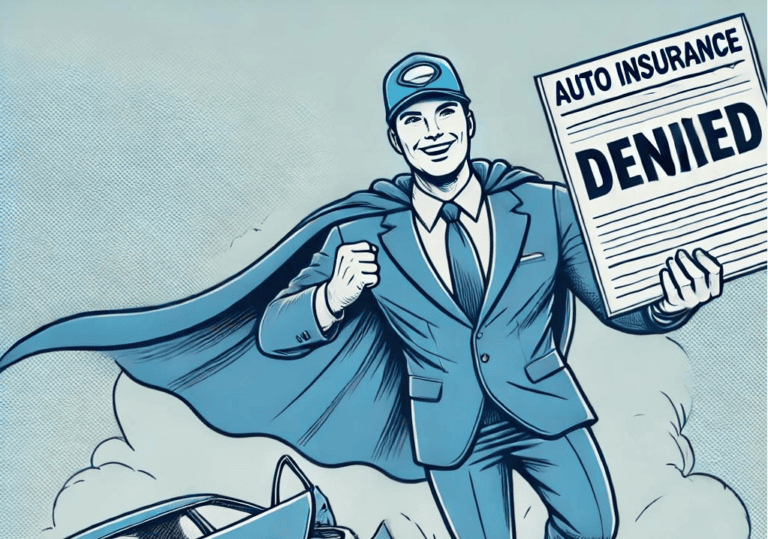
Your auto insurer took your premiums every month without question. Now, after an accident, they are dragging their feet, disputing your claim, or offering a settlement that does not come close to covering what you lost. That is not a coverage gap. That is bad faith.
Our attorneys at Collins & Collins, P.C. represent drivers and passengers across Bernalillo County and New Mexico who are fighting back against insurers that refuse to pay what they owe. As Albuquerque auto insurance bad faith lawyers, our team knows exactly how these companies operate, the stall tactics, the lowball offers, and the fine print they use to deny legitimate UM/UIM claims. Parrish Collins has been taking on these cases in New Mexico since 1989.
You should not have to fight your own insurance company to get what you paid for. If your claim was denied, undervalued, or ignored, call (505) 242-5958 or request a no-obligation case review today. We are located at 407 7th St NW, Albuquerque, NM 87102, and serve clients throughout New Mexico.
Under NMSA 1978 § 59A-16-20, New Mexico law prohibits insurers from handling claims unfairly and imposes specific duties on every auto insurer. When your insurance company knowingly violates those duties, that is bad faith and it is actionable. These are the tactics our lawyers see repeat across New Mexico auto claims:
Very professional & knowledgeable. Gave a very detailed description of legal proceedings. And very positive.
A denial letter is not the end of your claim. What you do in the days and weeks after matters. Here is what our lawyers recommend:
Contact us at (505) 242-5958 before both clocks expire.
A bad faith claim forces you to fight your insurer while recovering from an accident, managing medical appointments, and keeping up with expenses. The back and forth, the waiting, the pressure to settle fast. It wears people down. That is the strategy.
When your insurer’s conduct crosses into bad faith, New Mexico law treats it as a tort. The damages available go well beyond the original claim value.
Past results do not guarantee similar outcomes. Every case is different, and the value of any claim depends on its specific facts.
NMSA 1978 § 59A-16-20 defines specific conduct that constitutes unfair claims practices in New Mexico. An auto insurer violates this statute by, among other things:
Under NMSA 1978 § 59A-16-30, policyholders whose insurers violate these duties have a private right of action in district court. The statute of limitations for an auto insurance bad faith claim in New Mexico is four years from the date of the wrongful denial. A separate three-year limitation applies to the underlying personal injury claim, but the bad faith tort runs on its own clock.
The statute of limitations on underinsured motorist claims involves additional nuances that an attorney should review promptly.
Uninsured and underinsured motorist claims are among the most common sources of auto insurance bad faith in New Mexico. Under New Mexico law, every auto insurer must offer UM/UIM coverage unless the policyholder explicitly rejects it in writing. When you file a UM/UIM claim, your own insurer steps into an adversarial role. The same company that collected your premiums begins evaluating your claim with the same skepticism it would apply to a stranger.
New Mexico courts have confirmed that insurers owe the same duty of good faith to first-party UM/UIM claimants as they do under any direct liability claim. Delays, lowball valuations, and blanket denials of UM/UIM claims without genuine investigation all violate NMSA 1978 § 59A-16-20.
New Mexico also permits stacking of UM/UIM coverage in some circumstances. Policyholders who paid premiums on multiple vehicles may be entitled to stack those limits, and insurers who improperly reject stacking without a clearly worded written rejection violate New Mexico law. An explanation of uninsured and underinsured motorist coverage in New Mexico covers what this means for your policy.
If your own insurer is treating your UM/UIM claim the way an opposing party’s insurer would, call our team at (505) 242-5958 to evaluate whether the conduct crosses the line into bad faith.
Auto insurers enter bad faith litigation with institutional advantages. In-house counsel, dedicated adjusters, and claims departments are built to minimize payouts. Our lawyers know how those systems operate and how to move against them.
We are records-driven, trial-ready, and selective. Every case starts with a thorough review of your claim file, correspondence, and policy documents. Where the facts require it, our team works with accident reconstruction experts and medical professionals to establish what actually happened and what the insurer knew when they made their decision.
We decline cases where the insurer’s position has a legitimate factual basis. When we accept a case, it is because the insurer’s conduct was unreasonable and the harm to the policyholder was real.
Our firm handles insurance bad faith claims across all policy types throughout New Mexico.
Collins & Collins, P.C., handles auto insurance bad faith cases across New Mexico. Parrish Collins has litigated bad faith claims in New Mexico since 1989, including UM/UIM disputes, total loss valuations, and delay-driven denials. We review every case on its facts and take on matters where the evidence and the law support a legitimate claim. Here is what sets our team apart:
Collins & Collins, P.C. represents auto insurance bad faith claimants across New Mexico, not just in Albuquerque and Bernalillo County. Drivers from Santa Fe, Rio Rancho, Las Cruces, Farmington, and Roswell contact us following denied or undervalued auto and UM/UIM claims. Cases are filed in the Second Judicial District Court in Albuquerque or, where jurisdiction requirements are met, in the U.S. District Court for the District of New Mexico.
New Mexico’s Unfair Claims Practices Act applies statewide. The duty of good faith every auto insurer owes to every policyholder does not depend on the city where the accident occurred.
If your auto insurance claim was denied or mishandled anywhere in New Mexico, call us at (505) 242-5958.
Four years from the date of the bad faith conduct, typically the date of the wrongful denial. This is distinct from the three-year statute of limitations for personal injury claims arising from the same accident. The two deadlines run separately. Act on both claims at the same time.
Yes. In New Mexico, your insurer owes you the same duty of good faith on uninsured and underinsured motorist claims as it does on any first-party claim. Treating your UM/UIM claim as an adversarial proceeding or refusing to pay within a reasonable time after establishing your loss are both actionable under NMSA 1978 § 59A-16-20. New Mexico’s rule on uninsured motorist coverage requires specific written rejections, and failure to obtain them creates broader coverage obligations for the insurer.
New Mexico follows pure comparative fault, meaning you can recover even if you were partially responsible. An insurer that inflates your share of fault without factual support to minimize your claim is acting in bad faith under NMSA 1978 § 59A-16-20(E).
No. New Mexico law prohibits insurers from retaliating against policyholders for exercising their legal rights. Canceling coverage or raising premiums because a policyholder filed a bad faith claim is itself an unfair claims practice under NMSA 1978 § 59A-16-20.
A first-party claim involves your own insurer refusing to pay your losses under your own policy, such as UM/UIM, collision, or PIP coverage. A third-party claim involves another person’s insurer refusing to settle a claim you have against their insured. Both are governed by New Mexico’s insurance bad faith framework, and both can give rise to bad faith claims.
Yes. Our lawyers represent auto insurance bad faith claimants throughout New Mexico, including clients from Santa Fe, Rio Rancho, Las Cruces, Farmington, and Roswell. New Mexico’s Unfair Claims Practices Act applies statewide, and so does our representation. Call (505) 242-5958 to discuss your case.
If your auto insurance claim was denied, delayed, or valued far below what the damage was worth, our team at Collins & Collins, P.C. will review your case at no cost and no obligation. We are located at 407 7th St NW, Albuquerque, NM 87102, and serve clients throughout New Mexico.
Call (505) 242-5958 or complete the case review form today.
Past results do not guarantee similar outcomes. Every case is different, and the value of any claim depends on its specific facts.
If you or a loved one has been harmed by negligence, medical malpractice, or injustice in New Mexico, Collins & Collins, P.C. is here to fight for the compensation you deserve. Your first conversation is always free and confidential.
Victim of Systemic Abuse?
We Can Help.
Get a confidential, no-obligation case evaluation from an experienced New Mexico systemic abuse & neglect lawyer.
Or fill out the form
"*" indicates required fields
Available 24/7 Online
Copyright © 2026 – Collins & Collins P.C. All Rights Reserved.
Past results do not guarantee any future outcome, and every case is different.
Collins & Collins, P.C.
Accessibility Statement
Compliance status
We firmly believe that the internet should be available and accessible to anyone, and are committed to providing a website that is accessible to the widest possible audience, regardless of circumstance and ability.
To fulfill this, we aim to adhere as strictly as possible to the World Wide Web Consortium’s (W3C) Web Content Accessibility Guidelines 2.1 (WCAG 2.1) at the AA level. These guidelines explain how to make web content accessible to people with a wide array of disabilities. Complying with those guidelines helps us ensure that the website is accessible to all people: blind people, people with motor impairments, visual impairment, cognitive disabilities, and more.
This website utilizes various technologies that are meant to make it as accessible as possible at all times. We utilize an accessibility interface that allows persons with specific disabilities to adjust the website’s UI (user interface) and design it to their personal needs.
Additionally, the website utilizes an AI-based application that runs in the background and optimizes its accessibility level constantly. This application remediates the website’s HTML, adapts Its functionality and behavior for screen-readers used by the blind users, and for keyboard functions used by individuals with motor impairments.
If you’ve found a malfunction or have ideas for improvement, we’ll be happy to hear from you. You can reach out to the website’s operators by using the following email
Screen-reader and keyboard navigation
Our website implements the ARIA attributes (Accessible Rich Internet Applications) technique, alongside various different behavioral changes, to ensure blind users visiting with screen-readers are able to read, comprehend, and enjoy the website’s functions. As soon as a user with a screen-reader enters your site, they immediately receive a prompt to enter the Screen-Reader Profile so they can browse and operate your site effectively. Here’s how our website covers some of the most important screen-reader requirements, alongside console screenshots of code examples:
Screen-reader optimization: we run a background process that learns the website’s components from top to bottom, to ensure ongoing compliance even when updating the website. In this process, we provide screen-readers with meaningful data using the ARIA set of attributes. For example, we provide accurate form labels; descriptions for actionable icons (social media icons, search icons, cart icons, etc.); validation guidance for form inputs; element roles such as buttons, menus, modal dialogues (popups), and others. Additionally, the background process scans all the website’s images and provides an accurate and meaningful image-object-recognition-based description as an ALT (alternate text) tag for images that are not described. It will also extract texts that are embedded within the image, using an OCR (optical character recognition) technology. To turn on screen-reader adjustments at any time, users need only to press the Alt+1 keyboard combination. Screen-reader users also get automatic announcements to turn the Screen-reader mode on as soon as they enter the website.
These adjustments are compatible with all popular screen readers, including JAWS and NVDA.
Keyboard navigation optimization: The background process also adjusts the website’s HTML, and adds various behaviors using JavaScript code to make the website operable by the keyboard. This includes the ability to navigate the website using the Tab and Shift+Tab keys, operate dropdowns with the arrow keys, close them with Esc, trigger buttons and links using the Enter key, navigate between radio and checkbox elements using the arrow keys, and fill them in with the Spacebar or Enter key.Additionally, keyboard users will find quick-navigation and content-skip menus, available at any time by clicking Alt+1, or as the first elements of the site while navigating with the keyboard. The background process also handles triggered popups by moving the keyboard focus towards them as soon as they appear, and not allow the focus drift outside it.
Users can also use shortcuts such as “M” (menus), “H” (headings), “F” (forms), “B” (buttons), and “G” (graphics) to jump to specific elements.
Disability profiles supported in our website
Additional UI, design, and readability adjustments
Browser and assistive technology compatibility
We aim to support the widest array of browsers and assistive technologies as possible, so our users can choose the best fitting tools for them, with as few limitations as possible. Therefore, we have worked very hard to be able to support all major systems that comprise over 95% of the user market share including Google Chrome, Mozilla Firefox, Apple Safari, Opera and Microsoft Edge, JAWS and NVDA (screen readers).
Notes, comments, and feedback
Despite our very best efforts to allow anybody to adjust the website to their needs. There may still be pages or sections that are not fully accessible, are in the process of becoming accessible, or are lacking an adequate technological solution to make them accessible. Still, we are continually improving our accessibility, adding, updating and improving its options and features, and developing and adopting new technologies. All this is meant to reach the optimal level of accessibility, following technological advancements. For any assistance, please reach out to