

When a nursing home resident suddenly becomes confused, weak, overly sleepy, or unstable, families often know something is wrong before staff explains what happened. In some cases, the problem is not a new illness but a medication mistake that should have been prevented.
Nursing home medication errors in New Mexico can involve the wrong drug, wrong dose, missed dose, wrong timing, or a dangerous drug combination. For older adults, even one mistake can cause falls, bleeding, confusion, hospitalization, or a rapid decline. The risk is higher because many residents live with frailty, chronic illness, and polypharmacy, meaning they take several medications at once. These errors often involve breakdowns in staffing, communication, supervision, or recordkeeping.
While not every bad outcome is negligence, many medication errors are preventable with safer systems and closer monitoring.
What Is a Medication Error in NM Nursing Homes?
A medication error is not the same as an unavoidable side effect or allergic reaction. The National Coordinating Council for Medication Error Reporting and Prevention defines a medication error as any preventable event that may cause inappropriate medication use or patient harm while a drug is being prescribed, dispensed, administered, or monitored.
For nursing home residents, that means the medication was not handled safely or correctly. A resident may receive the wrong drug, the wrong dose, medication at the wrong time, the wrong route, or inadequate monitoring after the medication is given. What makes it a medication error is that the problem could likely have been avoided with proper care, communication, and safety steps. Families can consult a New Mexico Nursing Home Neglect Lawyer if there is concern about preventable harm.
Medication errors in nursing homes may include:
- The wrong drug: A resident is given a medication that was prescribed for someone else or was never ordered for that resident.
- The wrong dose: The resident receives too much or too little of the medication prescribed.
- A missed dose: Staff fail to give a scheduled medication at all.
- Incorrect timing: Medication is given too early, too late, or at inconsistent times that affect safety or effectiveness.
- The wrong route of administration: A drug is given the wrong way, such as by mouth instead of injection or through the wrong feeding method.
- Failure to monitor for side effects or drug interactions: Staff do not watch for warning signs after the medication is given or fail to catch harmful combinations.
- Giving expired medication: The resident receives a drug that is past its safe use date.
- Crushing a medication that should not be crushed: Some medications lose their intended effect or become dangerous when altered.
- Failing to update medications after a hospital discharge: Old medications may continue, new ones may be missed, or instructions may not be reconciled properly.
- Giving PRN (as-needed) medication too often or without proper documentation: As-needed medication may be overused, repeated too soon, or given without a clear record of why it was administered.
In a nursing home setting, medication mistakes can quickly become dangerous, especially when residents depend on staff to manage their medications safely.
Common Forms of Medication Errors in NM Facilities
Medication errors in nursing homes often fall into four categories based on how they happen. Each type points to a different kind of breakdown in care.
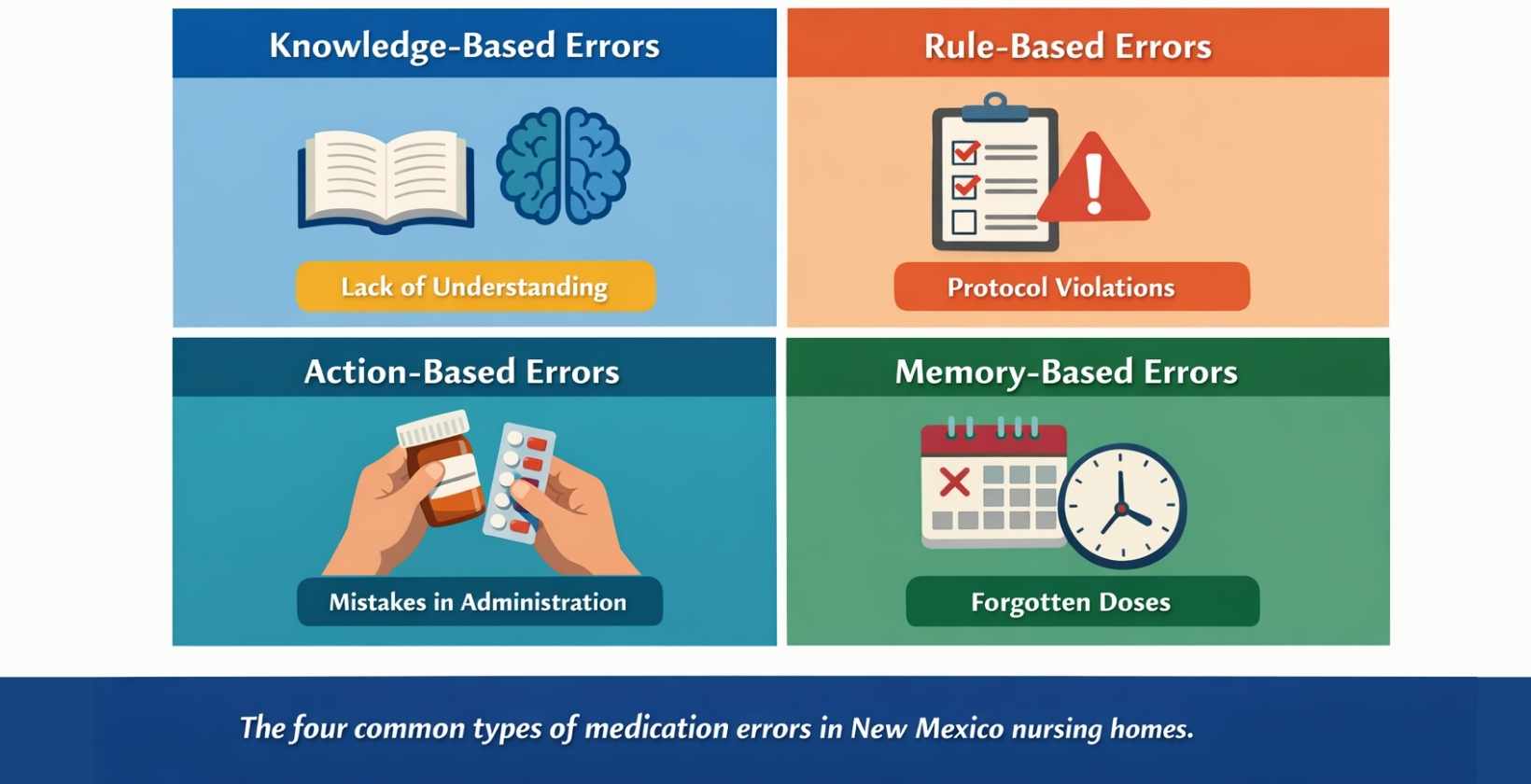
- Knowledge-based Errors: These happen when staff do not fully understand a medication or how it should be given. For example, a caregiver may crush a medication that should not be crushed, miss a harmful drug interaction, or fail to recognize when monitoring is required.
- Rule-based Errors: These happen when staff do not follow established medication protocols. This may include ignoring dosage instructions, skipping required safety checks, failing to rotate injection sites, or not giving medication with food or water when required.
- Action-based Errors: These are hands-on mistakes made during medication administration. A staff member may grab the wrong bottle, choose the wrong resident in an electronic record system, or give one resident’s medication to another during a busy medication pass.
- Memory-based Errors: These involve forgetting a required step. Examples include omitting a dose, failing to document administration, or not monitoring for side effects after giving a high-risk drug.
Recognizing these patterns can help families see whether a medication issue appears isolated or points to a larger problem in the facility’s care system. Consulting with a New Mexico Medical Negligence Lawyer can clarify potential legal options.
Systemic Causes of Medication Errors in Nursing Homes
In nursing homes and long-term care facilities, medication errors often reflect larger problems with staffing, training, communication, and oversight rather than one caregiver’s error. These patterns can help explain how preventable harm occurs.
Understaffing and Heavy Workloads
Understaffing and high turnover increase the risk of medication mistakes. When too few nurses or aides are responsible for too many residents, medication passes may be rushed, and safety checks may be skipped. Temporary staff may also be unfamiliar with a resident’s medical history, allergies, usual condition, or recent medication changes.
This can lead to:
- Skipped double checks
- Incomplete or incorrect charting
- Medication given to the wrong resident
- Delayed recognition of side effects or adverse reactions
Inadequate Training and Delegation
In some facilities, medication administration is delegated to non-licensed staff under supervision. That can create risk when delegated staff are not fully trained to recognize drug interactions, contraindications, dosage limits, or monitoring needs. The danger grows when staff are expected to perform medication tasks without enough clinical support or follow-up.
Problems may arise when staff:
- crush medication that should not be crushed
- miss signs of an adverse reaction
- fail to monitor high-risk drugs
- overlook harmful interactions or contraindications
Communication Failures
Many medication errors begin with poor communication during shift handoffs, order changes, or hospital returns. A resident’s MAR or eMAR may not match the current physician order. A discontinued drug may remain active in the chart. A new prescription may be added without clear instructions about timing, dosage, or monitoring.
Common communication problems include:
- incomplete shift handoffs
- unclear or outdated physician orders
- failure to update the MAR or eMAR promptly
- missed medication reconciliation after hospital discharge
Errors may also happen when handwritten orders are hard to read, prescription cards are outdated, or chart updates are delayed.
Organizational Factors and Unsafe Systems
Facility culture also affects medication safety. When speed is prioritized over verification, staff may move through a medication pass without confirming the right resident, drug, dose, time, and route. When workers fear blame for reporting mistakes or near misses, unsafe patterns may continue without correction.
Poor system design can make the problem worse. Confusing documentation tools, inconsistent procedures, and weak oversight all increase the chance of preventable medication errors. A New Mexico Elder Neglect Lawyer can review cases where these drugs were mishandled.
High-Risk Drugs: Antipsychotics, Blood Thinners, and Insulin Errors
Some medications carry a much higher risk of serious harm when they are given incorrectly, monitored poorly, or used without a clear medical reason. In nursing homes, mistakes involving these high-alert medications can lead to hospitalization, rapid decline, or death.
- Antipsychotics: Medications such as haloperidol, quetiapine, and risperidone may be appropriate in limited situations, but they raise major concerns when used to sedate a resident for staff convenience rather than treatment. In nursing homes, this can become a form of chemical restraint. Problems often arise when the drug is used without clear medical justification, proper documentation, informed consent, or periodic review. The result may be excessive sedation, worsening confusion, falls, or a higher stroke risk in older adults with dementia.
- Blood thinners: Anticoagulants such as warfarin require precise dosing and close monitoring. Errors often happen when lab results are not reviewed in time, dose adjustments are missed, or warning signs of bleeding are overlooked. A mistake with these medications can lead to internal bleeding, severe bruising, gastrointestinal hemorrhage, or stroke risk when the resident is underdosed.
- Insulin and diabetic medications: These medications must be coordinated carefully with meals, blood sugar checks, and physician orders. Serious problems can develop when insulin is given at the wrong time, in the wrong amount, or without regard to food intake. For older adults, this can cause confusion, fainting, seizures, hospitalization, or other signs of severe hypoglycemia.
- Opioid pain medications: Drugs such as morphine or oxycodone may be necessary in some cases, but they require close supervision. Errors may involve too much medication, repeated as-needed dosing, or poor follow-up after administration. The harm can include excessive drowsiness, slowed breathing, falls, or overdose.
Warning Signs: How to Spot Medication Mismanagement
Many nursing home residents cannot clearly explain new symptoms or changes in how they feel. Families are often the first to notice that a loved one seems suddenly different after a medication change, a hospital return, or an unexpected decline.
1. Physical warning signs
- Unexplained bruising or bleeding, especially in residents taking blood thinners
- Sudden dizziness or repeated falls
- New fractures without a known injury
- Severe drowsiness
- Rapid changes in blood sugar
- New or unexplained gastrointestinal problems, such as vomiting or bleeding
2. Behavioral changes
- Sudden confusion or worsening memory
- Agitation or unusual mood changes
- Extreme lethargy or oversedation
- Changes in sleep patterns
- Loss of appetite or refusal to eat
3. Staff-related red flags
- Inconsistent explanations about medication changes
- Defensive responses when questions are asked
- Missing, incomplete, or outdated documentation in the chart
- Unclear answers about who prescribed or adjusted a medication
A single symptom does not always mean a medication error occurred. But when several changes appear at once, or a decline follows a medication change, the situation deserves closer attention.
If you notice two or more of these warning signs, ask for the current medication list, the MAR, and an explanation of what changed and why. You can also ask who ordered the medication, when it was started or adjusted, and what monitoring the staff is supposed to be doing now.
Mandatory Safety Measures: Staffing, Training, and Protocols
Nursing homes need reliable safety systems to reduce medication errors. They should have clear systems in place to make medication administration safer, catch mistakes early, and reduce the risk of serious harm.
- Training and Competency: Staff training should go beyond how to hand out medication. Nurses and delegated staff should understand basic drug effects, common interactions, monitoring needs, when a medication must not be crushed or altered, and early signs of an adverse drug event. Competency should be checked regularly, not assumed.
- Reporting Culture: Facilities should have a reporting system that allows staff to report mistakes and near misses without fear of retaliation. When errors are reported early, the facility has a better chance of correcting unsafe patterns before a resident is harmed.
- Operational Checks: Safe medication systems should include routine review of the medication administration record (MAR), quick updates to physician orders, accurate charting, and medication reconciliation after a hospital transfer or discharge. Nursing homes should also use double-check procedures for high-alert medications and regular medication reviews when residents take multiple prescriptions.
- Technology and System Design: Electronic charting, labeling, and medication records should be clear, current, and easy to use during a busy medication pass. Confusing or outdated systems can increase the risk of duplicate doses, missed doses, or documentation mistakes.
Medication safety depends on staffing, training, accurate records, and systems that are built to catch problems before they cause harm.
When Is a Nursing Home Medication Error Negligence in New Mexico?
Not every bad outcome after medication means negligence occurred. Some nursing home residents are medically fragile, and some medications carry known risks even when they are used properly. But when a resident is harmed because staff gave the wrong medication, missed a dose, failed to follow a physician’s order, ignored monitoring needs, or did not update the chart after a medication change, the issue may go beyond an unfortunate outcome and point to preventable negligence.
What to Do Right Away
If the resident shows signs of medical distress, call 911 immediately. You may also report concerns to:
- The Long-Term Care Ombudsman
- The New Mexico Department of Health or the appropriate state licensing agency
- Adult Protective Services
In New Mexico, complaints about licensed health facilities may also be submitted through the state agency responsible for healthcare facility oversight.
Who May Be Legally Responsible
Liability depends on what happened and who was involved. In some cases, the nursing home may be responsible for poor staffing, weak supervision, poor recordkeeping, or failure to follow facility procedures. In other cases, responsibility may involve an individual nurse, a prescribing provider, or a pharmacy that filled, labeled, or communicated the order incorrectly.
What a Legal Review Looks At
A legal review usually starts with the records. That may include physician orders, the MAR, hospital discharge instructions, lab results, nursing notes, monitoring records, and the resident’s care plan. The goal is to determine whether the harm was tied to a known medical risk or to a preventable breakdown in care.
If the records suggest negligence, the next steps may include a more detailed case review, consultation with a medical expert when needed, and an evaluation of whether a claim should be pursued through settlement discussions or litigation. In New Mexico, medical malpractice claims generally must be filed within three years of the act of malpractice, and wrongful death claims generally must be filed within three years of the date of death.
Potential Legal Remedies
If a medication error was caused by negligence, the family may be able to pursue compensation for the harm that followed. Depending on the facts, that may include additional medical expenses, pain and suffering, hospitalization costs, rehabilitation, and wrongful death damages if the error contributed to a fatal outcome.
What Research Shows About Nursing Home Medication Errors
Medication errors are a documented problem in nursing homes and other long-term care settings. A systematic review found that medication errors affected about 16% to 27% of nursing home residents in studies examining all types of medication errors, and 13% to 31% of residents in studies focused on transfer-related errors. The same review found that 75% of residents were prescribed at least one potentially inappropriate medication.
Federal oversight findings are also concerning. The U.S. Department of Health and Human Services Office of Inspector General found that 22% of Medicare beneficiaries in skilled nursing facilities experienced adverse events, and another 11% experienced temporary harm events during stays of 35 days or less. Reviewers concluded that 59% of those events were clearly or likely preventable.
Different studies measure medication errors differently, but the pattern is consistent: medication-related harm in nursing homes is common, and a meaningful share of it appears preventable with better monitoring, medication reconciliation, documentation, and follow-up.
Get Legal Help for Nursing Home Medication Errors in New Mexico
Medication errors in nursing homes are often tied to failures in staffing, supervision, communication, or recordkeeping. When those failures cause serious harm, families may have grounds to question whether the facility or another provider failed to meet the required standard of care.
At Collins & Collins, P.C., a no-obligation case review may include reviewing records, rebuilding the timeline, and explaining what legal options may be available under New Mexico law. We help families in Albuquerque, Santa Fe, Rio Rancho, Las Cruces, and throughout New Mexico understand what happened and what steps may come next.
Frequently Asked Questions (FAQs)
We simplify complex legal matters by providing clear, concise, and accurate answers to your most pressing questions.
Medication errors often happen when hospital discharge instructions, the nursing home chart, and the resident’s updated medication list do not match. Problems can arise if discontinued drugs remain active, new prescriptions are missed, or the staff does not complete medication reconciliation after the resident returns.
A side effect can happen even when a medication is prescribed and given correctly. A medication error involves a preventable problem, such as the wrong drug, wrong dose, missed dose, poor monitoring, or failure to follow the physician’s order.
It depends. You may have a claim if the medication error contributed to your parent’s death and the records support negligence, malpractice, or wrongful death rather than an unavoidable medical complication.
It depends. A nursing home may describe the decline as part of the resident’s condition, but the medication timeline, physician orders, MAR entries, lab results, and monitoring notes may help show whether the decline followed a preventable medication mistake.